End of the Year Reflection

          Al-righty then.

          This is the second to last blog post until school starts back up in January, and I am going to write about the best pieces of work I have done so far this semester that I am very proud of.
          First was the video project that I did on the state of our ocean waters and how our
 littering effects it.  As of the moment the video is not hosted anywhere, but I am working on getting it hosted to youtube (it's currently uploading).  I feel like I really connected to this project because I am a person that cares about the oceans, and the amount of untapped power and unseen beauty that lies within it, and I am definitely not one to stop and let the people that say they are the same as me ruin it.  I put a lot of work into it, and as there are some timing issues that I would love to fix, it is too late now.  I am also proud of how some of my shots were taken.  This shot here I feel is a great artistic shot because of the wide angle and how much it covers and shows.  It shows a cigarette butt sitting in a gutter in the bottom right corner, yet a great blue cloudy sky in the top left.  I feel like it really shows how one little thing can ruin a
 great big thing, just by being in the wrong place, which was really the whole point of the project that I was working on and I feel that this specific shot shows that.
          I got to this point through tons of hard work and time.  I think I stayed in at least days from 7:30 till at least 7:30.  I also worked hard outside of the classroom, in order to get interviews outside of the school, or footage outside of school.  I feel like good projects really require more than a slight motivation and some internet research.  It requires a huge drive and a lot of research, not only through the internet, but through people, places, and things.  For instance for this project I went to a beach cleanup hosted by Surfrider SD and Coastkeeper, and I found some interesting information, such as the amount of trash picked up there, and also the types of trash that was found there.

Neptune's Navy!


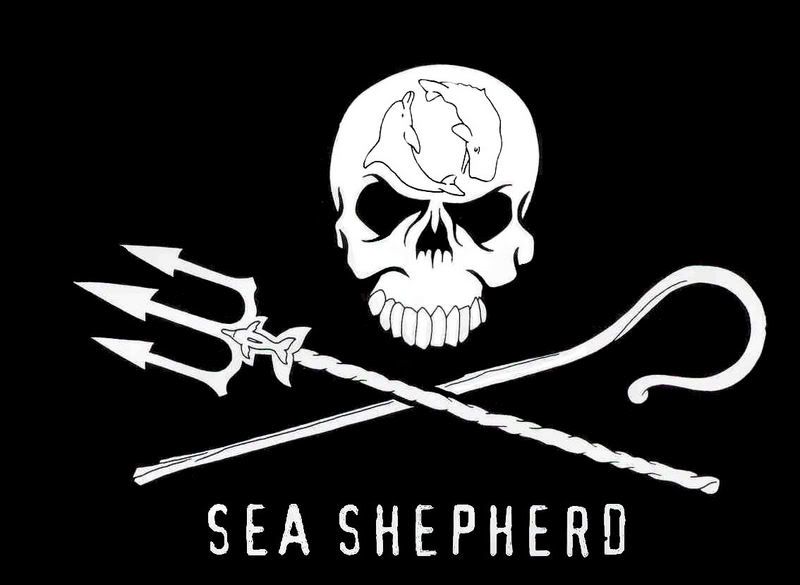
          An interesting vigilante environmentalist group known as the Sea Shepherds has recently become very publicized in the United States, thanks to support from Animal Planet, and I am going to post a blog on my personal opinions about what they do.

          The Captain and Owner of the Sea Shepherd Conservation Society is named Paul Watson.  He looks like a stereotypical lumber jack, only a foot shorter and with white hair.  Ever since he was a child he was completely against any sort of cruel behavior towards any animal.  He even claims that, when he was 9 years old, he shot a kid with a B.B. gun for harassing birds, and destroyed animal traps after his "pet beaver" got stuck in one.  Now as I am unsure about the truth to these stories, this man has dedicated himself to the preservation of marine wildlife around the world.
          Now, the people that he is trying to expose to the world are the japanese.  The japanese are currently the biggest threat to whales in the wild, killing more than a thousand in december of 2005.  The japanese excuse for this currently illegal activity is that it is for research, commonly showing signs in english stating "Collecting tissue samples" and painting the word Research on the side of every whaling vessel they have in their fleet.  The problem here is, the company that they are doing research for, the Institute for Cetacean Research, has never published a thing, which most people think is due to the fact that their whales get cut up and shipped to restaurants before any research can be done to them.
          Companies such as Greenpeace, which Paul Watson helped give an influential start to, are not in support of the techniques used, and claimed to have been used, by the Sea Shepherds, commonly denying any relation to the eco-vigilante group.  The techniques used by the Sea Shepherds include ramming, smoke bombs, boarding vessels or various reasons, and media attention.  One of their most commonly used tools is the media, and they know how to use it.  They are a big story in australian now, because of the fact that the japanese are whaling in an australian protected habitat.  Where the methods of the Sea Shepherds may be wrong, violent, and sometimes a risk to whalers lives, there are still a lot of supporters in their campaign against whaling, such as Pierce Brosnan, Orlando Bloom and Mic Jagger.
          Personally, I feel as if the Sea Shepherds are correct, because I like the idea of protecting endangered animals such as the fin whales, a prominent capture of the japanese, whether the whalers get hurt or not.  I believe this because they need to be taught a lesson, and if extremes are necessary, it will show the japanese governments just how much people care, and they might stop, or even slow down their whaling expeditions. 

Racial Identity Theft On The Rise!

          Ok, so it isn't really theft, but it is a problem that has been going on unnoticed for a long time.   The issue here is racial assumption, the act of thinking someone is from a certain ethnic group just by their look. An example of this is when people look at Oprah, they think that she is black. It may seem that way, but really, she is a mix of African, Native American, and East Asian. This whole assumption thing poses a big problem in my mind, and it is triggered by a few various things.
          The first thing that I would like to bring up would be the large yet somewhat realistic stereotype of the so called "Black" people and their crime rates. According to the official government Bureau of Justice website on the statistics of homicide trends by race, between the year 1976 and 2005, 52% of all homicides in the United States were committed by one who was recognized as an African American.  But, if you go to the site, there is no listings for hispanics, and the only other statistic is listed "other", and the rates for other are extremely low compared to White and Black, never exceeding 5%.  First off, this does not give a good name to the word "Black" at all, almost giving an excuse for racial stereotypes.  Second,  it is almost shameful for the great American government themselves to give out statistics such as this because of the fact that they do not include any sort of information regarding mixed race people, and, the statistics seem a little off because they do not include hispanics.  The fact that it does not include hispanics, and if hispanics were included in the group labeled "other", then they would have committed less than 5% of every homicide in America since 1976.  Does that make much sense to you?

          The next point I would like to make is what we have done with the professional people that have made it far in America.  Obama, the next president, is, believe it or not, is not "Black".  Obama is not the first black president, but he is the first multiracial president.  The news has given off a nice sort of story that is almost convincing everyone in america that we have the first black president, and the black people have come such a long ways in America.  Do you really think so?  Obama's mother was white.
          The big question now is, does putting the name "Black", with all of its negative connotations, on to some one of the multiracial status of Tiger Woods, or Barack Obama, bring the negative connotation of the term further toward the positive side? Or does it make the person the connotation is being applied to look worse?  The big picture here is, we really have not put much thought into how we as a people refer to others, and that in turn has led to a lot of assumptions, some of which can possibly be very dangerous.

Literary Devices in the Last of the Mohicans


This book was an interesting one. The book’s theme was one of racial divides, and how the Native Americans dealt with, and were dealt with the struggles during the third year of the French American war. The theme was brought about by various literary devices, and especially ones that are often forgotten. Some literary devices used to bring about the theme in this book were imagery, dialogue, and tone.

The first literary device this book offers up is imagery. Imagery can be shown in many ways. The book starts describing the setting, “The alarmed colonists believed that the yells of the savages mingled with every fitful gust of wind that issued from the interminable forests of the west.” The imagery within this sentence really sets up the setting as a place you would not want to be in. An unending forest filled with savage natives that would kill you on sight, showing the theme of the story right there in the beginning pages of the book. Another time this was used was further in the book, where it says “They complied without hesitation, though many a fearful and anxious glance was thrown behind them toward the thickening gloom which now lay like a dark barrier along the margin of the stream.” This bit of imagery is really good because it makes you see a void of darkness, instilling fear into your very heart and soul, and all because of the ever looming presence of the various native tribes. A Third example of this would be when it described “… around him, there was a sullen fierceness mingled with the quiet of the savage that was likely to arrest the attention of much more experienced eyes than those which now scanned him in unconcealed amazement.” This is describing how the English saw the Mohican Indian Runner as, as person with a sullen fierceness, and the quiet of the savage. It shows you how the natives were seen through the eyes of the white folk, which in turn draws out the theme.

The second literary device that I will be showing is dialogue. It is an often overlooked device that is sometimes even overused to nowhere near its full potential. One example of dialogue in this book is “even their own kind seem no more than the beasts of the wood.” This is a genuine quote showing the true nature of the divide between the natives and the settlers. “Beasts of the wood” is simply put a huge insult, further developing the theme. Another good use of description is “Let us remember we are men without a cross, and let us teach these natives of the forest that white blood can run as freely as red…” This quote here is of a white man talking about the natives, and how they can so easily slip in an out of the woods, and be stealthy and quick. But this also shows the white man being more aggressive. The man is explaining how his group can possibly outrun the natives, showing a competition between the two groups of people. “Well may you laugh, ye children of the devil.” Is a very simple quote, which pushes the theme of the story almost down the reader’s throat. It is so strong, that it is hard to not see the theme projected in it.

Tone is a very important literary device in any novel. It sets the mood at which you tell the story. It can be expressed through other literary devices as well. This quote, “The alarmed colonists believed that the yells of the savages mingled with every fitful gust of wind that issued from the interminable forests of the west,” mentioned earlier in the imagery section, is a perfect way to show two literary devices in one. The imagery sets the tone of darkness and fear, which is what the colonists held against the natives at that time. Another way tone can be set is through dialogue. This already stated quote, “even their own kind seem no more than the beasts of the wood,” is a good way to show this because it sets a mood of anger and distaste, hinting at the whole message of the racial divide between the French and the natives. One last quote from the book shows how a description can set the tone of the book, which was “The colors of the war paint had blended in dark confusion about his fierce countenance, and rendered his swarthy lineaments still more savage and repulsive than if art had attempted an effect.” This quote is showing how just by the war paint, it sets a tone of repulsiveness toward the native, making him ever more uncivilized than the common white colonist of the era.

In conclusion, imagery, dialogue, and tone are common, yet overlooked literary devices that can easily set the theme of a story alone. It was done very well within the Last of the Mohicans, as well as a string of other literary devices, creating the great classic that the story now stands as.

More Stuff on the H2O Project


This H2O project has not surprised me with some of the information that I have come across, but one of the biggest things that surprised me was about plastics. The website San Diego Coastkeeper has really opened my eyes on the hideous truth of littered plastic.
To start out, plastic does not biodegrade, it only breaks into smaller pieces of plastic. There is a place in the pacific ocean called the "Eastern Garbage Patch" that is full up of plastics, and it is roughly the size of Texas. These plastics are causing our world to ruin, along with many other littered items.
Things that I need to do in order to carry on my project are to keep working on my script, finalize interview questions, and get all of my filming done and ready to edit.

Thanksgiving Break

Thankfulness is not part of my personality. But if I had to be thankful for something, it would probably be for those people down in the south with the funny accents that made our country free from British rule, so we can all stuff our faces one day of the year.

The things that I will be doing over thanksgiving break would be:

  1. Interview Surfrider
  2. Film Dog Beach
  3. Film SD Bay in the evening
Happy thanksgiving!

The Youth Vote

          After reading the article that we were assigned to read for this blog, An Eternal Revolution, it really got me thinking about the youth of our nation.  I recently have read an article on this called Waiting in Line, The Youth Vote Could Change History.  It talks about how the youth impacts the vote today, and how a huge change was brought about with the youth vote back in 1972.  This huge change was when they made the legal voting age 18, whereas the previous legal voting age was 21.  This change brought about a huge uprising in votes, much like the choice between a black and white president has within our society today. One of the biggest reasons also given for the big uprising in votes back in 1972 was the war that was being fought, and the amount of anti-war youth in our nation.

          This relates to our election because even with this election, there were very many controversial topics that were brought up during the election, much like the war in 1972, that our youth had a very strong opinion on.  There was also a large change in the way that our political system works, which was the choice of two different races running for president, much like the change in voting age from 21 to 18.